
O ver the past decade, accelerating changes in the global climate have transformed how scientists and industry leaders observe and operate within some of the planet’s most extreme ocean environments. Nowhere is this shift more evident than in the Arctic, where there has been a surge in naval activity, undersea infrastructure development, and environmental monitoring efforts.
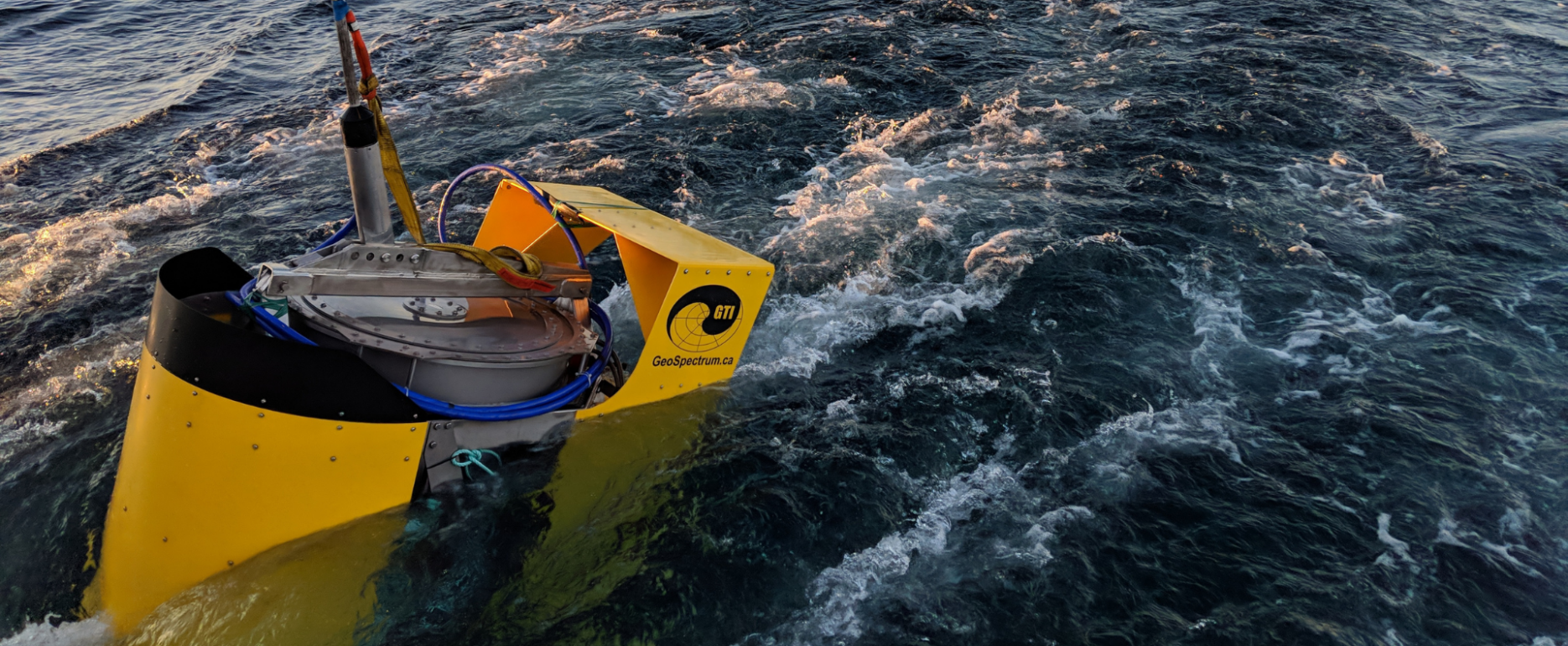
As this region grows in strategic and scientific importance, reliable sensing and communication technologies have become essential. Very low-frequency (VLF) acoustic sources—such as GeoSpectrum’s C-Bass—are emerging as a critical enabler of sustained Arctic surveillance. These systems support four core capabilities: accurate environment-specific performance prediction, robust undersea communication between unmanned assets and remote operators, long-range passive monitoring using cost-effective autonomous platforms, and precise under-ice localization and tracking at key chokepoint locations.
VLF sources are uniquely suited to Arctic conditions. Their signals propagate across vast distances with minimal energy loss, allowing wide-area coverage in complex and ice-covered waters. Equally important, their ability to operate autonomously for extended periods reduces the need for frequent maintenance or human intervention—an essential advantage in remote polar regions and deep ocean basins where access is limited and costly. Together, these attributes position VLF technology as a cornerstone for persistent, scalable, and resilient Arctic undersea operations.
LOW FREQUENCIES, HIGH IMPACT
Ongoing field experiments, such as the Central Arctic Acoustic Thermometry Experiment (CAATEX), a research program focused on improving understanding of climate-driven change in the central Arctic Ocean, have demonstrated how long-range acoustics can support both scientific research and operational awareness in this remote environment. One such effort involved the deployment of very low-frequency sound sources as part of a basin-scale study of the Arctic Ocean.
In the summer and fall of 2019, C-Bass sound sources were installed on autonomous subsea moorings equipped with onboard computers, signal generators, amplifiers, and battery power. Relying on batteries rather than surface vessels allowed the systems to operate independently for extended periods, a practical necessity in ice-covered regions where access is limited. Each source was programmed to transmit acoustic signals every third day over the course of a year, providing a consistent and repeatable signal set for analysis. The reception ranges from the C-Bass sources extended across the entire Arctic Basin, including in excess of 2500 km.
This wide coverage enables researchers to examine acoustic propagation over long distances and under varying ice and oceanographic conditions, contributing to a clearer picture of how the Arctic Ocean is responding to a warming climate.
Increased funding for deep-water research and surveillance strengthens the ability of the ocean technology and defence sectors to support informed decisions, environmental stewardship, and defence priorities in a rapidly changing world.